How Symbol Clustering Shapes Engagement Patterns in Cluster-Pay Slot Engines on Licensed European Platforms
Avery Flores · Jul 19, 2026
How Symbol Clustering Shapes Engagement Patterns in Cluster-Pay Slot Engines on Licensed European Platforms
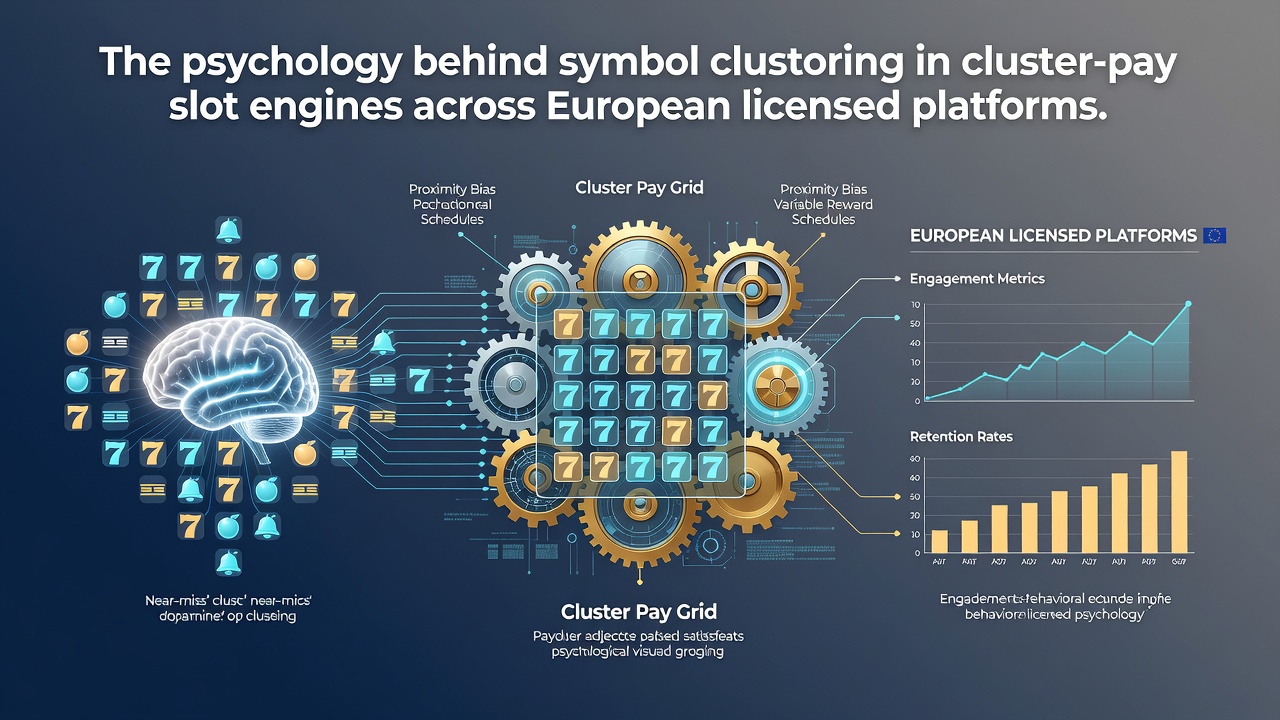
Cluster-pay slot engines operate by awarding payouts when identical symbols land in connected groups rather than along fixed paylines, and this mechanic draws directly from established principles of visual perception and cognitive processing. Researchers in behavioral psychology note that players respond to grouped elements because the human visual system organizes information according to proximity and similarity, principles first outlined in Gestalt theory and later applied to digital interfaces. European platforms licensed under frameworks such as those overseen by the Malta Gaming Authority and the Swedish Gambling Authority must present these mechanics within strict technical standards that govern random number generation and payout disclosure.
Core Visual Processing Mechanisms at Work
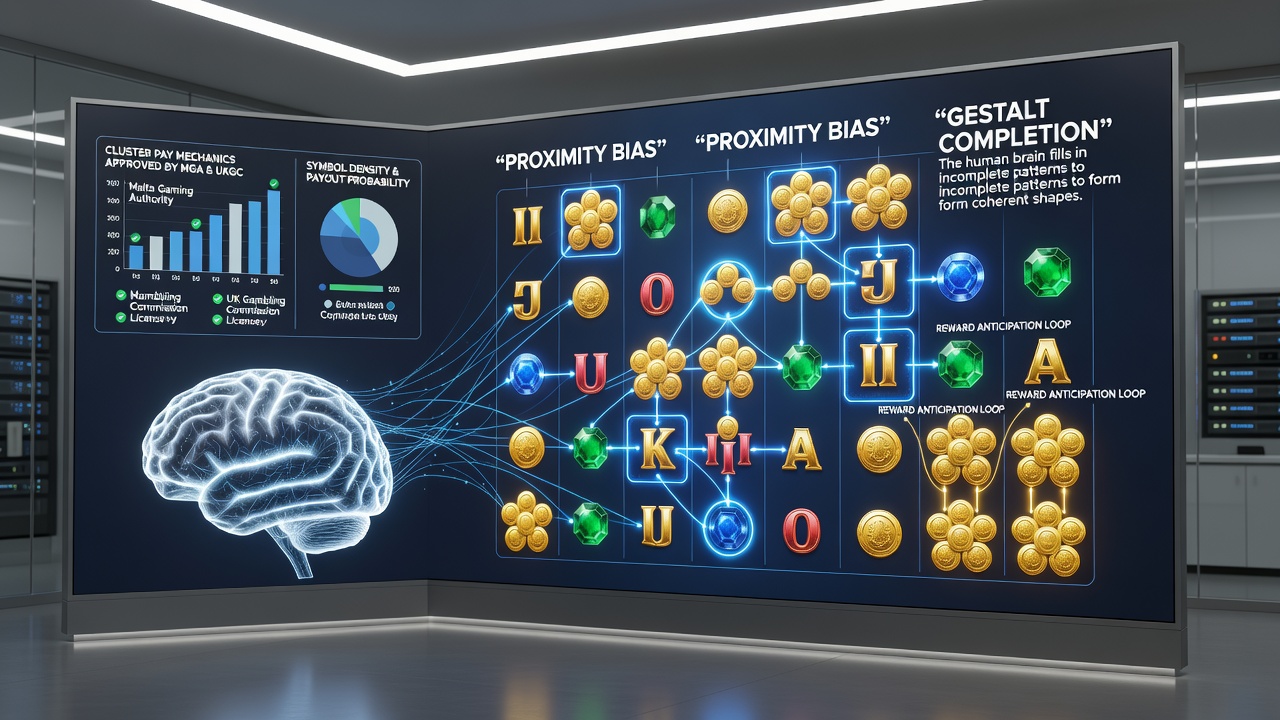
Symbol clustering exploits the brain's tendency to perceive adjacent identical items as a single unit, which accelerates recognition and reduces cognitive load during rapid reel spins. Studies conducted at universities across the Netherlands and Germany have measured eye-tracking data showing that players fixate longer on forming clusters than on scattered symbols, a pattern that aligns with how the visual cortex prioritizes coherent shapes over isolated elements. When clusters expand across multiple reels, the resulting visual continuity triggers heightened attention because the arrangement satisfies the brain's preference for order amid random outcomes.
European operators integrate these engines into games that comply with technical requirements set by national regulators, ensuring that cluster formation probabilities remain transparent in published return-to-player figures. Data from the European Gaming and Betting Association indicates that cluster-pay titles accounted for an increasing share of new releases in 2025 and early 2026, reflecting operator adoption of mechanics that sustain session length through incremental visual rewards.
Reward Pathways and Anticipation Cycles
Neuroimaging research reveals that cluster formation activates dopamine pathways in ways similar to other variable-ratio reinforcement schedules common in gaming. Each partial cluster that appears near a payout threshold creates a brief anticipatory state, and successful completion of the group delivers the reinforcing stimulus. Observers note that this cycle repeats more frequently in cluster-pay formats than in traditional line-based slots because multiple small clusters can form within a single spin sequence.
Platforms operating under licenses from bodies such as the Gibraltar Regulatory Authority incorporate responsible gaming tools that display session timers and deposit limits alongside these mechanics. The design choice keeps the focus on transparent presentation while the underlying psychology of grouping continues to influence how players interpret near-miss clusters that fall just short of payout thresholds.
Regulatory Context and Technical Standards in 2026
By July 2026 several European jurisdictions had updated their technical standards to require clearer display of cluster boundaries and payout calculations, responding to industry reports that highlighted player confusion over irregular cluster shapes. These updates build on earlier guidelines from the European Commission concerning consumer information in online gambling, ensuring that visual effects do not obscure the underlying probability data.
Analyses from research institutions in Denmark and Finland show that cluster size distribution affects average session duration, with larger potential clusters correlating to extended play intervals before voluntary breaks. Operators adjust reel configurations and symbol frequency tables within these regulatory boundaries to maintain compliance while preserving the perceptual appeal of grouped symbols.
Comparative Observations Across Markets
Cross-border comparisons reveal that players on platforms licensed in multiple European states encounter similar cluster mechanics yet experience them within differing responsible gaming overlays. Data compiled by academic teams at institutions in Spain and Italy indicate that the same cluster formation probabilities produce comparable patterns of repeated spins across regions when demographic variables remain constant. Such findings underscore that the psychological response stems primarily from the visual structure rather than from regional cultural factors.
Software providers supply the same core engines to operators across these markets, with minor adjustments to comply with local display rules. The consistency allows researchers to isolate the effects of clustering itself when studying engagement metrics supplied by participating platforms under anonymized data-sharing agreements.
Conclusion
Symbol clustering in cluster-pay engines engages established visual and reward-processing systems that European regulators continue to monitor through technical standards and responsible gaming requirements. Evidence from multiple studies demonstrates that the arrangement of symbols influences attention and session patterns in measurable ways, while licensed operators present these mechanics within frameworks that prioritize transparency. Continued research across European academic and regulatory bodies will track how these dynamics evolve alongside further technical refinements in 2026 and beyond.